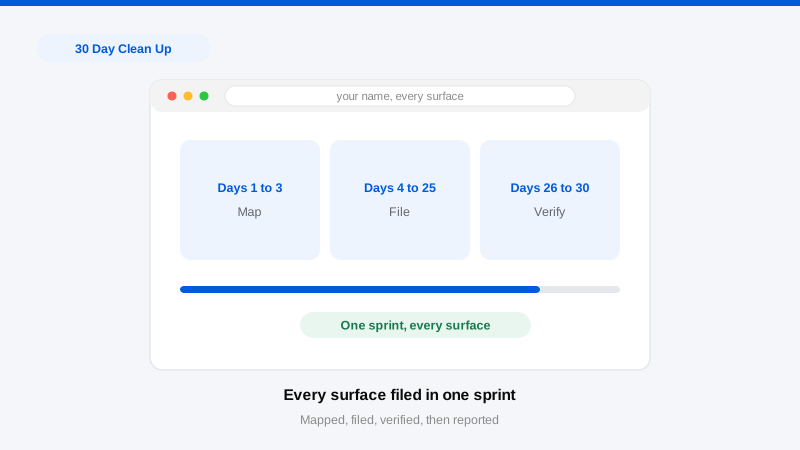
The 30 Day Clean Up is a single month of concentrated removal work: three days mapping everything that exists about you online, three weeks working every surface at once, and a final week verifying what actually came down. You get a written report at the end and a clear decision about whether anything needs ongoing protection.
Key facts
- The sprint is one month with a defined scope, a defined end point and a written report, rather than an open retainer.
- Mapping comes first, and you approve the register before anything is acted on.
- Copyright is the strongest position anyone has over their own images and video, and it reaches hosts, content delivery networks and search engines alike.
- GDPR Article 17, the right to erasure, gives private individuals in the UK and the European Union a position that companies do not have.
- Data broker and people-search listings repopulate from upstream sources, so a listing that disappears is not necessarily gone.
- Autocomplete suggestions follow the underlying results rather than leading them, which is why they are the slowest thing on any register.
- Every item is verified at the source, in the cache and in search results on Google and Bing before it is called done.
What the 30 Day Clean Up is
Most removal work fails because it is done one item at a time. Someone finds a leaked gallery, files a notice, waits, then finds three more sites two months later. Meanwhile the fake accounts are still live, the forum thread is still ranking, and the search results have not moved.
The sprint fixes that by treating your whole footprint as one job with one deadline. Every surface is filed on in the same window, so the copies do not have time to reseed while you are working on the original. It is the productised version of what we normally run as a retained engagement, compressed into a month with a defined scope and a defined end point.
Who it is for
- Creators after a leak. Paid content scraped and reposted across leak sites, Telegram channels and forums, with fake accounts selling it.
- Founders after a pile-on. A thread, a video, a wave of posts and the search results that followed.
- Private individuals who have simply never cleaned up: old profiles, data broker listings, an outdated news item, an autocomplete suggestion that follows their name.
- People preparing for something. A raise, an exit, a book, a listing, a custody matter, a security review.
If you are already living with a live campaign that is still escalating, a sprint is the wrong shape and we will say so. Ongoing attacks need a retained engagement, not a fixed month.
Days 1 to 3: what is the mapping phase?
We build the register: every URL, account, image set, video, thread, review, listing and search result that mentions you, across Google and Bing, the major platforms, leak and repost sites, forums, data brokers, and autocomplete. Each item is graded removable, de-indexable, suppress or leave alone. You see this before anything is acted on, and you can strike anything from the list.
Days 4 to 25: working every surface at once
This is the body of the sprint. Everything on the approved register is worked in the same window rather than one item after another, which is the whole point: copies reseed faster than a serial approach can clear them, and a footprint dealt with piece by piece is never actually finished.
Leaked and reposted material, impersonation accounts, review and complaint entries, forum threads, search results and autocomplete are all in play at the same time, on whatever ground genuinely applies to each. Where something is refused, it is worked again inside the window rather than written off. Most first refusals are not final answers, and the sprint is built to absorb two or three passes on an item rather than one.
Days 26 to 30: verification and the report
Nothing is called done because something was submitted. Each item is rechecked at the source, in the cache, and in search results on Google and Bing. The report lists every item, what came down, what did not, and why. It is written to be readable by your lawyer, your board or your family office, and it is yours to keep.
Get a Free, Confidential Exposure Scan
What is in scope and what is not
In scope: leaked and reposted images and video, impersonation and fake accounts, review and complaint site entries that break the site’s own rules, forum threads and archived posts, search results and outdated content, and data broker and people-search listings.
Out of scope: content you do not own and cannot show is unlawful, genuine criticism and honest opinion, authentic negative reviews from real customers, court records and official public registers, rebuilding your own site and content, and monitoring after day 30.
Press coverage is handled case by case. A false factual claim inside an article is in scope. A fair report of something that happened is not going to be removed by anyone, and we will not take money to pretend otherwise. See remove search results for what search can and cannot do about it.
Being honest about what may not come down in 30 days
Some things run longer than a month, and you should know which before you start rather than after.
Court orders take months, not weeks. Publishers move on their own timetable. Search decisions can take several weeks and can be appealed by the publisher. Offshore hosts with no abuse process are slow by nature, and archived pages on services designed to preserve content are difficult by design. Sites that exist to extort payment for removal are dealt with in other ways, never by paying them.
Where an item will not resolve inside the month, the report says so, tells you what stage it reached, and gives you the realistic next step. That is the difference between a sprint that ends and a retainer that never does.
What happens after day 30
Most clients need nothing further, and we say so. Where the risk is ongoing, because you are public, because the same actors keep coming back, or because a leak source is still active, a Protection Plan picks up monitoring and re-filing so new items are caught in days rather than discovered in months. That is an option, not a condition of the sprint.
What the law and the platform rules make possible
A sprint works because several separate systems can be pushed at the same time, and each one has its own basis that does not depend on the others.
Copyright is the strongest instrument for anything you created. Section 512 of the US Copyright Act reaches hosts, content delivery networks and search engines, and it does not require anyone to agree that the material is unfair. For leaked or scraped content it does most of the work.
Privacy law carries much of the rest. Article 17 of the GDPR supports erasure of personal data across the UK and the European Union, Google separately removes certain personal information from results in every country, and many US states now provide deletion rights that data brokers must honor, which is what makes people-search listings addressable rather than permanent. Platform policies cover the remaining surface, and where a site sits offshore with no abuse process there are still levers, because the domain and the money both sit somewhere.
What none of that reaches is honest opinion, accurate reporting and official public records. We say which of your items fall in that group before you spend anything on them.
What we need from you to start
The scan runs on public information. The sprint itself needs a short handover, usually one call and one folder.
- Every name you use: legal name, stage or brand name, former names, company names, the names of anyone else who appears in the material.
- The URLs you already know about, including anything friends have sent you privately.
- Originals of the images, video, course material or written work that was taken, with proof of authorship.
- Proof of identity where a privacy or data broker matter requires it, handled under NDA and used only for that purpose.
- Old profiles and addresses you want cleared, including accounts you no longer have access to.
- A written authorization naming who instructs us, which may be you, your chief of staff, your lawyer or your agency.
Timelines and what usually happens first
Day one is the register, not a burst of activity. You see the map before anything is done, and you can strike any item from it.
After that, some items move within days and others run for weeks, with autocomplete lagging everything because it follows the results rather than leading them. Those are ranges drawn from the work, not commitments. Hosts, platforms, search engines and courts make their own decisions, and the report tells you exactly where each item stood on day 30.
Common mistakes that make it harder
- Dealing with one item at a time. Copies reseed faster than a serial approach can clear them, which is the whole reason the sprint exists.
- Paying an operator. It funds the next site, tells them your name is worth revisiting, and buys nothing you can verify, because an unpublished page can be republished the same evening.
- Deleting your own accounts first. People delete the profile that proves authorship of their own images, then cannot file the copyright notice that would have cleared them.
- DIY reports. A rejected complaint leaves the item marked as reviewed, and a better one afterwards is harder to land.
- Replying in public. It introduces the content to an audience that had not seen it.
- Waiting for a quiet week. The map ages, more copies appear, and the same sprint becomes bigger work.
How this works alongside your lawyer, PR team or security team
The sprint is removal work, not legal advice, and it is built to sit under whoever is already advising you.
Where you have counsel, we do the removal work and give them an evidence file they can use if they decide to litigate, and we do nothing that cuts across a claim they are preparing. Where a communications team is handling a story, they decide what is said in public and we tell them what is realistically going to disappear and when, so nobody briefs a journalist on a removal that has not happened. Where a family office or security team is involved, they usually hold the household detail that makes privacy and data broker work effective. Everything runs under NDA, and the report is written to be read by all of them.
Who usually makes first contact and what the 15-minute call covers
Creators book the sprint themselves, often the week after a leak. Founders, families and public figures usually come through a chief of staff, a lawyer, a family office or an agency, and any of them can take the call.
Fifteen minutes covers what exists, which surfaces are involved, whether a fixed month is the right shape for your situation, and what the scan would look at. If a live campaign is still escalating we will tell you a sprint is the wrong shape and why. Nothing is signed on the call, and everything discussed is confidential.
Frequently asked questions
What does the 30 Day Clean Up cost?
Quoted in writing after the free Exposure Scan, once we know the size of your footprint. Most of what you pay is tied to items actually coming down: see success-based pricing. We do not quote before we have seen the map, because the honest answer depends on it.
Can you really do all of it in a month?
We can work all of it in a month and verify what landed. Whether every single item is gone by day 30 depends on hosts, platforms and courts we do not control. The report tells you exactly where each item stands.
Is this the same as your leaked content service?
It overlaps. Leaked content removal is the specialist route for stolen images and video, and it runs inside the sprint when that is part of your situation. The sprint is broader and covers accounts, reviews, threads and search as well.
Will you tell me if I do not need this?
Yes. If the scan shows a small, simple problem, we quote for that instead. Selling a month of work to someone who needs two filings would be a bad trade for both of us.
Who normally books it?
Creators book it themselves, usually the week after a leak. Founders and public figures come through a chief of staff, a lawyer or an agency. Everything runs under NDA as standard, and we work alongside counsel, PR and security teams where they exist. Creators can start at our page for creators or the digital footprint cleanup hub.
What happens on the call?
Fifteen minutes. You describe the situation, we tell you which routes exist, and we agree whether a scan makes sense. No pressure, no pitch deck.
Do I see the list before anything gets filed?
Yes. The register is produced in the first three days and approved by you before anything is acted on. You can strike any item, and clients regularly do, usually because an old post is better left alone than drawn attention to.
What happens to items that are still open on day 30?
They are listed in the report with the stage they reached and the realistic next step. Nothing is quietly dropped, and nothing is called removed because something was submitted. You decide whether to continue on those items or stop there.
If you want the whole thing dealt with in one month rather than dripped out over a year, start with a free, confidential exposure scan. We map every surface, tell you what is genuinely removable, and show you our process before you commit to anything.