Remove anything damaging from the internet
One damaging link can undo years of work. Our removal specialists take down harmful content from search engines, social platforms, forums and websites, cases other firms call impossible.
What we remove
- Defamatory posts, articles and forum threads
- Leaked or private images and videos
- Fake profiles and impersonation accounts
- Harmful search results and autocomplete
- Complaint-site listings and fake reviews
How it works
What clients say

Kayla Itsines
Founder, Sweat.com · Brand Protection
"Frankie & his team at Content Removal relentlessly protected our brand in the 7 years leading up to our first exit."

Alex Hormozi
Acquisition.com · Brand Protection
"These fake accounts not only diluted my brand presence but also risked misleading my vast follower base with counterfeit information... Content Removal removed these accounts in days."

William Brown
BuildGrowAndExit.com · Brand Protection
"I spent a lot of money on some complex problems we were trying to solve, and nobody could fix them. We'd almost given up."
How professional content removal works
Every case starts with an assessment: what the content is, where it lives, and which legal, policy or platform lever gives it the highest probability of permanent removal. Some content violates platform terms of service. Some breaches copyright, privacy or defamation law. Some can be de-indexed from search even when the source site refuses to act. Choosing the right lever, and applying it in the right order, is the difference between a removal that sticks and a takedown that reappears in a week.
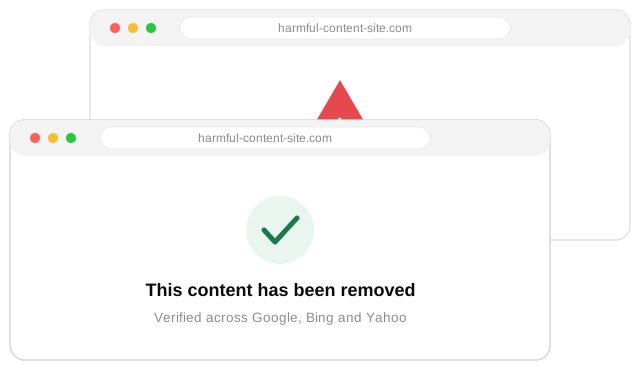
We handle the entire process: drafting and filing the applications, escalating past first-line moderation, negotiating with publishers and webmasters where needed, and verifying the removal across search engines once it comes down. You get status reports at every step, and everything is handled under strict confidentiality.
Why speed matters
Damaging content compounds. The longer a link sits in your search results, the more authority it accumulates, the more it gets shared and scraped, and the harder it becomes to remove. Content caught in the first days is dramatically easier to take down than content that has spread for months, which is why our members on Protection Plans have threats detected and filed against before most people would ever have found them.
Who typically needs content removed
The people who contact us are rarely who you'd expect. Executives discover a decade-old forum thread resurfacing during a funding round. Physicians and attorneys find complaint-site listings outranking their own practice pages. Parents learn a teenager's private images are circulating. Small business owners watch a single fabricated accusation eat into bookings week after week. Job seekers lose offers to a search result they thought everyone had forgotten. What these situations share is not fault. It's exposure. The internet indexes first and asks questions never, and ordinary people end up carrying content that would have been unpublishable in any edited medium.
Most clients arrive after weeks of trying to handle it alone: reporting buttons, unanswered emails to webmasters, sometimes a lawyer's letter that went nowhere. None of that effort is wasted, it often documents the harm, but it usually means the easy levers have been pulled in the wrong order. Part of our first assessment is simply mapping what has already been tried, what it changed, and which routes remain fully intact.
Mistakes that make removal harder
The most damaging mistake is engaging publicly. Replying to a defamatory thread, arguing in comments, or posting a rebuttal adds fresh activity to the page, signals relevance to search engines, and frequently hands the poster new material. The second is threatening people without leverage: a vague legal threat sent to a site owner who knows the law better than the sender can entrench a page that a well-grounded policy filing would have removed quietly. Third is paying removal ransoms to sites that solicit them. This marks you as a payer, and the wider ecosystem notices.
Deleting your own accounts in a panic can also backfire, breaking your control over profiles that were actually ranking well and defending your name. Before touching anything, it's worth knowing which parts of your search page are working for you. An honest assessment costs nothing and prevents the self-inflicted damage we most often have to unwind.
What a finished case looks like
Done, for us, is specific: every targeted URL either removed at the source or de-indexed from major search engines, cached copies purged, verification screenshots delivered for each item, and a written summary of anything that could not be removed and why. You should be able to search your name in a private browser window and see the difference, not take our word for it.
For clients whose risk is ongoing (public-facing professionals, anyone with a persistent adversary) the finished cleanup is usually the point where a Protection Plan takes over, so anything new is caught while it's still cheap and fast to remove. For everyone else, a clean verification report and a quiet search page is the end of the engagement.
Frequently asked questions
Can you really remove content from the internet? +
How long does content removal take? +
Is the process confidential? +
Start with a free, confidential Exposure Scan
We'll scan your digital footprint, show you exactly what's exposed, and recommend the fastest path to remove it, or tell you honestly if you don't need us.
Book Your Assessment